
Models and Interventions of Cognition
Our lab pursues the goal of formalizing and experimentally testing theories and hypotheses about cognitive mechanisms. The formal language of modeling allows us to abstract away from the concrete implementation of these mechanisms (whether in humans, animals, or computers).
We collaborate closely with students: see for Students if you are looking for a thesis topic.
Research directions
Human cognition is remarkably flexible. We seemingly adapt our perception, thinking, and behavior effortlessly to changing circumstances, pursue (and discard) self‑set goals, and take our own uncertainty into account when making decisions and acting. This level of flexibility has not yet been achieved in artificial intelligence.
Our research investigates the cognitive mechanisms underlying this flexibility and how they are implemented in the brain. We are also interested in how these processes contribute to mental health, and how they develop across the lifespan.
Approach
Our approach for studying these questions can be summarised as measure, model, perturb.
Measure: We develop innovative cognitive tasks for both adults as well as children that allow us to measure the behavioural and neural signatures (using EEG) of the cognitive process of interest reliably and efficiently.
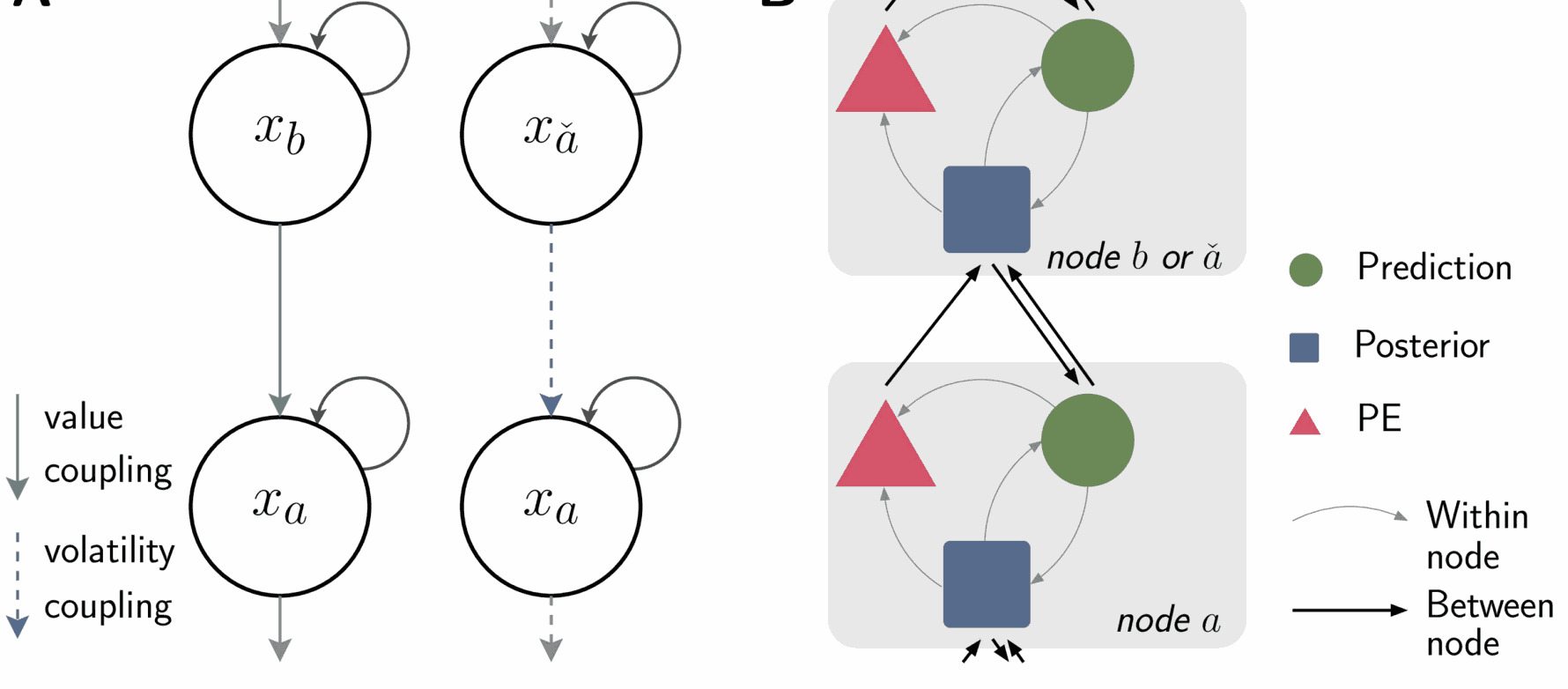
Model: We develop generative models of behaviour and neural activity that reflect our mechanistic understanding of these cognitive processes, building upon Bayesian and reinforcement learning modelling frameworks.
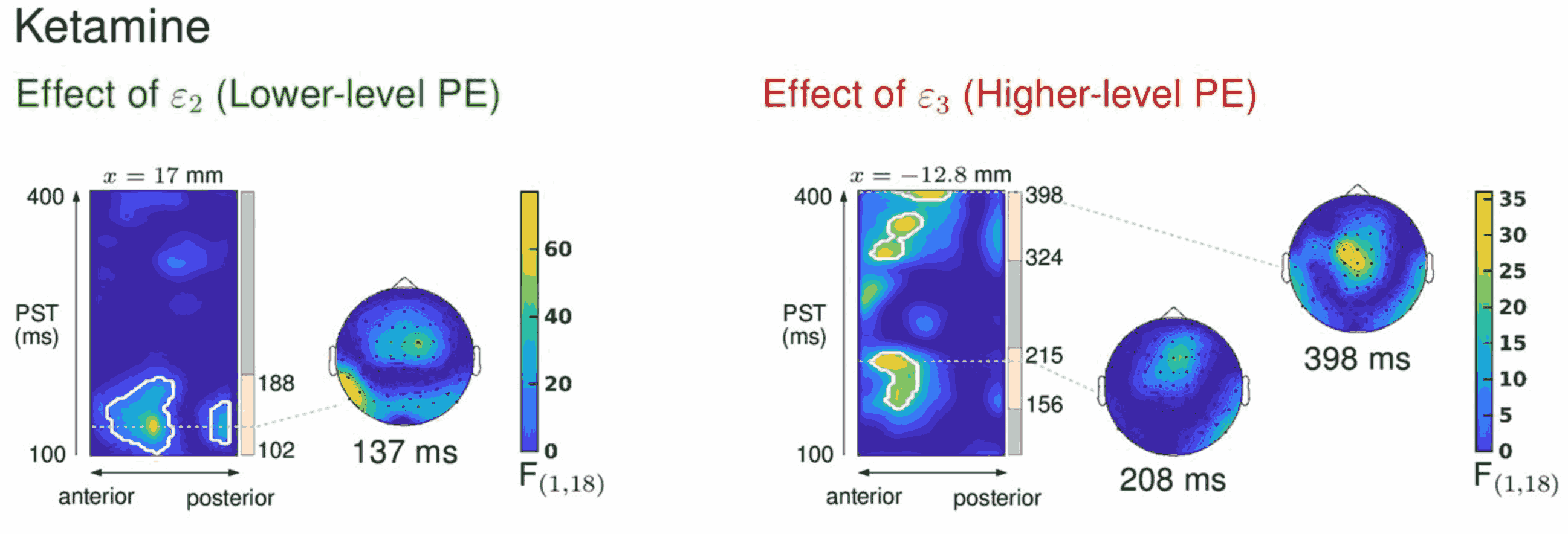
Perturb: While participants perform our tasks, we interfere with specific neural systems to test their causal role in supporting the cognitive process. For this we use pharmacology (targeting specific receptor types in the brain) and non-invasive brain stimulation with focussed ultrasound (targeting specific brain regions or nuclei).
Philosophy
In any serious work we do, we try to adhere to the principles of open science. That means we exert effort to make all our data and code available to public scrutiny.
Funded Projects
Publications
2026
Algermissen, J., Rascu, M., Weber, L., Boer, T. d., Martin, E., Treeby, B. E., Gray, M., Cleveland, R. O., Wittmann, M. K., Clarke, W. T., Fouragnan, E., Rushworth, M. F. S., & Klein-Flügge, M. C. (2026). Low-intensity focused ultrasound to human amygdala reveals a causal role in ambiguous emotion processing and alters local and network-level activity. Neuron. https://doi.org/10.1016/j.neuron.2026.03.009
Legrand, N., Weber, L., Waade, P. T., Daugaard, A. H. M., Khodadadi, M., Mikuš, N., & Mathys, C. (2026). pyhgf: A neural network library for predictive coding. PLoS Computational Biology. https://doi.org/10.1371/journal.pcbi.1014340
Foucault, C., Weber, L., & Hunt, L. T. (2026). Environmental dynamics shape human learning: change points versus random walks. eLife. https://doi.org/10.7554/elife.110137
Weber, L., Waade, P. T., Legrand, N., Møller, A. H., Stephan, K. E., & Mathys, C. (2026). The generalized Hierarchical Gaussian Filter. eLife. https://doi.org/10.7554/elife.110174
Dome, L., Hezemans, F. H., Kadri, K., Wagner, B. J., Webb, A., & Hauser, T. U. (2026). cpm: A python library for theory-driven modelling in computational psychiatry. PLoS Computational Biology. https://doi.org/10.1371/journal.pcbi.1014481
Orlando, I. F., Hezemans, F. H., Tsvetanov, K. A., Ye, R., Rua, C., Regenthal, R., Barker, R. A., Williams-Gray, C., Passamonti, L., Robbins, T., Rowe, J., & O'Callaghan, C. (2026). Short term heart rate variability is preserved in Parkinson's disease under atomoxetine. medRxiv. https://doi.org/10.64898/2026.03.15.26348415
Gönül, G., Karabulut, A., & Hohenberger, A. (2026). Insightful problem solving and social learning in children's tool making: Exploring the role of napping, night sleep, age, and gender. Acta Psychologica. https://doi.org/10.1016/j.actpsy.2026.107003
2025
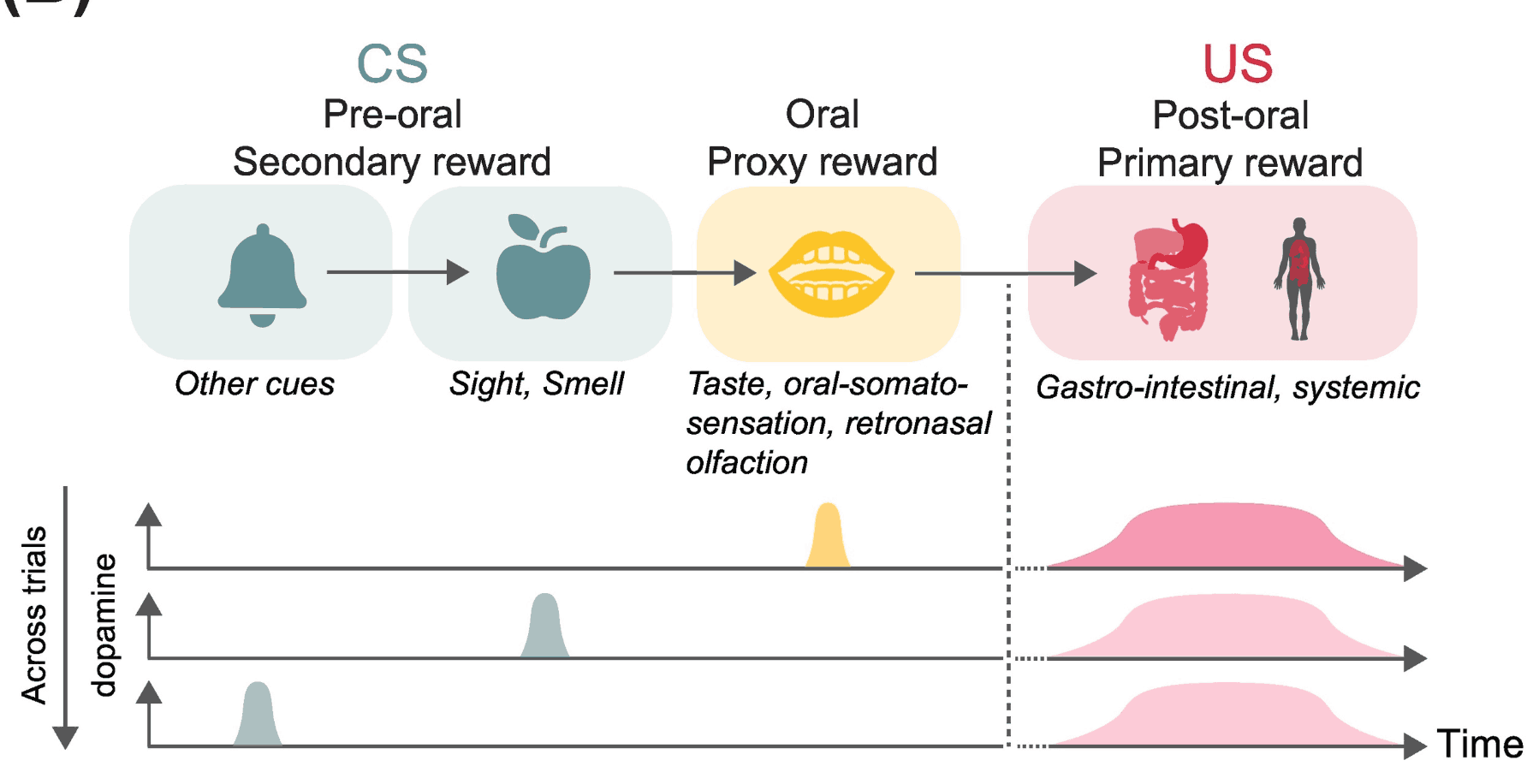
Weber, L., Yee, D., Small, D. M., & Petzschner, F. H. (2025). The interoceptive origin of reinforcement learning. Trends in Cognitive Sciences. https://doi.org/10.1016/j.tics.2025.05.008
Rascu, M., Algermissen, J., Weber, L., Boer, T. d., Rushworth, M. F. S., & Klein-Flügge, M. C. (2025). Deep Transcranial Ultrasonic Brain Stimulation During Decision-Making in Changing Social-Emotional Environments. Brain stimulation. https://doi.org/10.1016/j.brs.2024.12.582
Pereira, I., Galioulline, H., Enz, R., Hess, A. J., Müller-Schrader, M., Werder, D. v., Kertesz, I., Siemerkus, J., Schönleitner, F. M., Mellor, S., Brand, K., Kasper, L., Weber, L., Petzschner, F. H., Iglesias, S., Heinzle, J., & Stephan, K. E. (2025). Structured Code Review in Mental Health Research. Preprints.org. https://doi.org/10.20944/preprints202510.0133.v2